
✝️ Understanding Altars in the Bible
In the Bible, an altar is a sacred place of sacrifice, worship, and encounter between God and people. From the earliest times, it served as a physical expression of faith and devotion. Noah built an altar after the flood, offering sacrifices of thanksgiving to God, who then made a covenant never again to destroy the earth by water (Genesis 8:20–21). Abraham built several altars as he journeyed in obedience to God’s call, each one marking his faith and God’s promises. Most profoundly, on Mount Moriah, he built an altar to offer Isaac, where God provided a ram as a substitute (Genesis 22:9–14). Moses built altars to commemorate God’s victories and covenants, first calling one “The Lord is My Banner” after Israel’s triumph over Amalek (Exodus 17:15), and later at Mount Sinai, where the altar was sprinkled with blood to seal God’s covenant with Israel (Exodus 24:4–8). In the Tabernacle, God commanded two altars: the bronze altar for burnt offerings, symbolizing atonement through sacrifice (Exodus 27:1–8), and the golden altar of incense, representing prayer and fellowship with God (Exodus 30:1–10). Through these examples, the altar emerges as a symbol of faith, obedience, covenant, and divine presence.
🙏 Altars in the New Testament
In the New Testament, the only person directly shown praying at an altar is Zechariah, the father of John the Baptist. While serving as a priest in the temple, he entered to burn incense on the altar of incense, and as he prayed, the angel Gabriel appeared to announce the birth of his son (Luke 1:8–13). Later, the Book of Revelation describes a heavenly altar where the prayers of the saints rise before God like incense (Revelation 8:3–4), showing that the altar now symbolizes the spiritual connection between God and His people. The writer of Hebrews also refers to a spiritual altar, identifying Jesus Christ as the true and final altar through whom believers approach God (Hebrews 13:10). Thus, while Zechariah physically prayed from an altar, in the New Testament the concept becomes spiritual. Believers now pray through Christ, the living altar and mediator between God and humanity. All we need to do is believe that Jesus died for our sins, rose again, and strive to live as He guides us through His Spirit according to the Word.
🕊 Do You Still Need a Physical Altar Today?
So, do you still need a physical altar for prayer today? The answer is yes, but not because God requires it to hear you. God can hear your prayers anywhere and at any time. However, during seasons of intense prayer, repentance, self-deliverance, or spiritual warfare, having a dedicated place for prayer helps you stay focused, disciplined, and consistent in your fellowship with God.
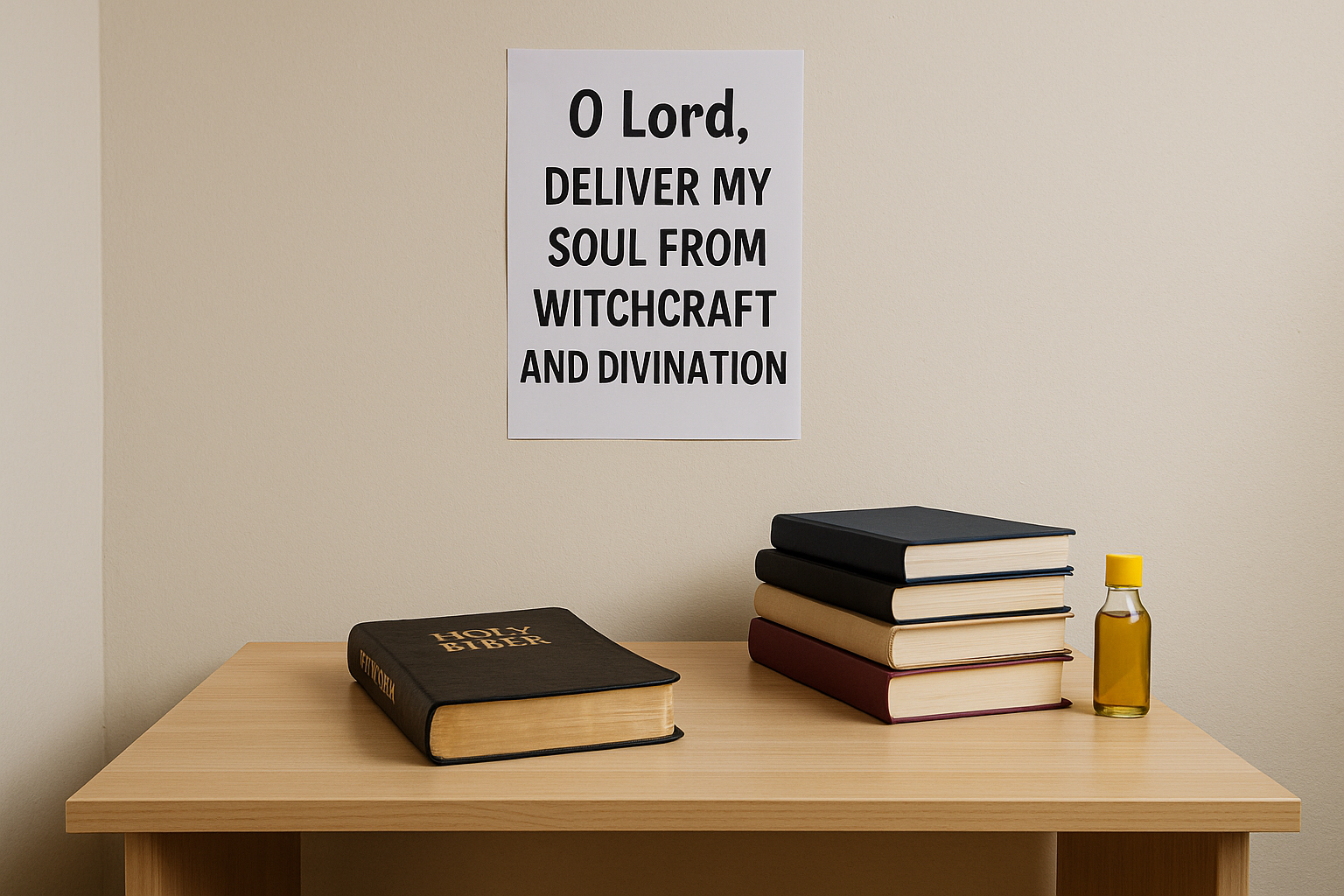
Your personal altar doesn’t need to be an entire room. It can simply be a small table, your bedside, living room, a quiet corner, or any specific spot where you regularly meet with God. The key is not the size of the space, but the intentionality behind it.
It’s important to note that while Jesus did not have a physical altar, He often withdrew from the crowds to pray in solitude for long hours. Likewise, in Acts 10:9, Simon Peter went up to the rooftop to pray when messengers from Cornelius’s house arrived. These powerful examples remind us of the importance of having a personal or family altar – a consistent meeting place with God where your spirit can be renewed.
Dr. Charles Stanley, founder of In Touch Ministries, once shared that during his student days, he made a personal commitment to always have an altar for prayer. He started with a small prayer space in his hostel, which grew over time as the Lord increased him. His testimony proves that your altar grows as your relationship with God deepens.
✨ What to Include on Your Personal Altar
Each person’s altar will look different, depending on how the Holy Spirit leads you. Here are a few meaningful items you may include:
- 📖 Your Bible and Christian books – Since your altar is also a place of study and meditation, keep God’s Word close.
- 🕯 Written prayers or declarations – These can guide your focus if you are not praying directly from the Bible or a digital platform. Try to limit the time you pray unguided unless you are praying in tongues.
- 🍞 Holy Communion elements – Useful for frequently renewing your covenant with Christ, especially if you are battling spiritual attacks such as sexual dreams, eating in dreams and dreams involving the diseased. Regular communion strengthens your consecration and connection with God.
- 🛢 Anointing oil – Applying oil frequently on your feet, shoulders, and neck while declaring God’s Word (Isaiah 10:27) serves as a reminder that “the anointing breaks the yoke.”
- ✍️ Promises and revelations – Write down any promises God has given you through Scripture, messages, or dreams. Post them where you pray and remind God often, just as the persistent widow in Luke 18 kept asking until she received her answer.
💡 Final Thoughts
Different believers may set up their altars in different ways, and some may even question the need for them. Yet one truth remains: if you desire an effective prayer life, self-deliverance, or spiritual growth, you must set aside a sacred space to build your relationship with God. Whether it is a small table, a quiet corner, or your bedside, what matters is your consistency, faith, and devotion. The altar is not about a structure; it is about a hungry heart seeking God.